What Happens at a Mastermind Retreat
We ran ours in Phoenix, Arizona on the twenty seventh, twenty eighth and twenty ninth of August. Nine in the morning until five in the afternoon, three days running, then dinner and something unstructured every evening. That is the shape of it, and the shape is the argument. Since people ask what actually happens at one of these and most accounts skip the schedule, here is how ours was built, hour by hour, and who I told not to come.
Three Days, Hour by Hour
The whole event is built around one idea. Three days is long enough to move from meeting a person to closing something with them, and almost nothing else in a coach's calendar is.
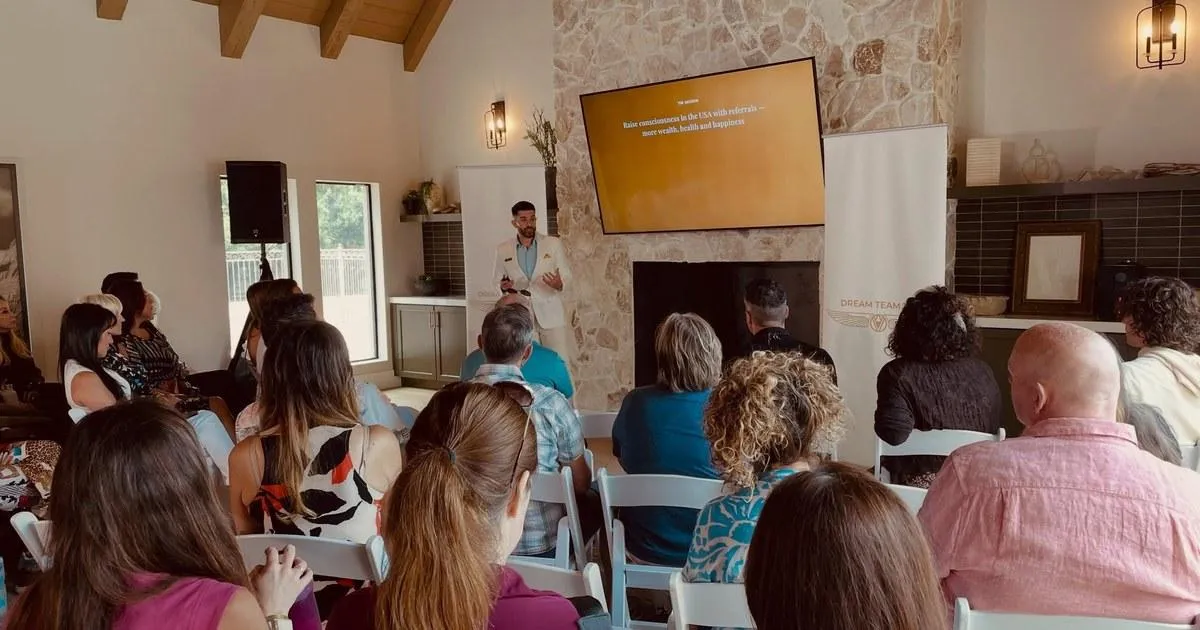
Day one was Vision Day… it’s about clarifying the “future reality” the attendees want to scale to. Sessions ran from nine in the morning to five, and the entire day was about meeting your referral partners, not watching speakers. I do the matchmaking myself, because the value of a curated room is exactly the curation. Dinner was at six at the house and the evening was a game night, which sounds like a nicety and is not. People refer people they have laughed with.
Day two was Referral Day. Same hours, and the work was generating introductions live, in the room, out loud, while the person being introduced was standing there. This is the part that does not translate to a video call. An introduction made in front of both people is a different commitment from one promised over email and forgotten by Thursday. Dinner again at six, then a wellness party.
Day three was Deal Day. Nine to five, and the job was turning the previous forty eight hours into something signed. Partnerships get defined, terms get agreed, and the vague "we should do something together" gets a date on it. The evening was a celebration night.
Why the Room Is Capped
Fifty is the number, and the reason is structural rather than promotional.
Past a certain size a room stops being a room. Introductions get shallow, the same six people talk, and belonging turns into attendance. Fifty is small enough that by day two everybody has met everybody, which is the precondition for a referral that means anything. It is the same reasoning behind capping the wider community at a hundred members. A ceiling is a design decision about how well people can know each other, not a scarcity tactic.
It is also why the room stops, not stretches. That one sold out.
What a Retreat Like This Costs to Attend
Since the question always comes up, ours was published at $5,000 per person against a capacity of 50, covering the three days of training and the meals. A private room at the house for four nights was a bonus on top of that rather than part of the ticket, and rooms were limited.
The lodging is the detail I would defend hardest, because it is the least obviously useful. Putting people under one roof is what produces the breakfast conversations and the late ones, and a fair share of the partnerships form there, not in the sessions.
The setting was a private property on more than an acre outside Phoenix. I mention it because it is doing work rather than because it photographs well. People who are relaxed introduce each other more generously than people in a conference hotel.
What a Retreat Does That a Monthly Call Cannot
Our members get two mastermind calls a month, and those calls are good. They are also, structurally, a queue. One person talks, the others wait, and the relationship builds a slice at a time.
Three days in one place inverts that. You get unstructured hours, which is where trust actually gets made, and you get the ability to close a loop in a single afternoon instead of across three months of scheduling. A referral has a half life. Introduce two people on a Tuesday and the conversation happens that week. Promise an introduction on a call and it competes with everything else in two inboxes.
If you are still working out whether the whole category is for you, start with what a business mastermind is and whether one is worth it. A retreat is a format inside that category, not a substitute for deciding on it.
Who Should Not Come
I would rather say this plainly than have somebody spend five thousand dollars discovering it. For a high-ticket coach… getting even just one client, stage or partnership and the $5k ticket pays for itself.
The room is built for six and seven figure coaches who are purpose driven and spiritually connected. If you are below six figures, the room will be expensive and premature. If you do not yet have a program people are buying, there is nothing for a referral partner to send anyone to. If you are a lone wolf who does not value community, you will find three days of it exhausting, not useful. And because the room mixes people with genuinely different beliefs, anyone who cannot be friends across that gap will have a hard time.
That list costs us applications and it saves everybody the wrong three days.
If You Are Weighing One
I am not going to tell you to come to ours, partly because there is no date published for the next one and partly because the format is not the thing to buy first. The retreats are something members get twice a year, so the sequence runs the other way around. The room comes first.
What I would say to anyone weighing any retreat is to ask who curates it, on what rule, and what happens on day three. If the answer to the third question is a keynote, you are buying a conference with better catering. Members have written up what the wider community produced for them, and who it is built for is set out here.
If that room sounds like where you should be, check whether your niche is still open.
FAQ on Mastermind Retreats
What is the purpose of a mastermind group?
To put you in regular contact with peers who can see your business more clearly than you can, and who have a reason to help. The purpose is leverage through relationships. Where groups differ is whether that leverage is advice, accountability or deal flow, and it is worth knowing which one you are buying.
How much does a retreat typically cost?
It ranges enormously, from a few hundred dollars for a weekend hosted by a peer group to five figures for small invitation only rooms. Ours was five thousand dollars per person with lodging and meals included. The number that matters is not the ticket, it is what a single new partnership from the room is worth to you.