Getting Referrals When You Are a Paid Speaker
For years I sat on the wrong side of the stage. I went to events, sat through speaker after speaker, crammed my networking into the breaks and flew home with a stack of business cards and no business. I assumed the people at the front had something I didn’t. A reel, a certificate, an agent who took their calls.
Most of them didn’t. What they had was a relationship with whoever was running the room. A referral put them on that stage, and the ones who knew what they were doing walked off it with more introductions than they walked on with. That’s the part the speaking advice aimed at coaches tends to skip.
How You Actually Become a Paid Speaker
You become a paid speaker by speaking first in rooms where the host already trusts you, then turning those talks into proof and referrals. Other coaches’ events, podcasts, retreats and partner launches book people they know or people someone they trust has vouched for. The reel, the fee and the bureau come after that, not before.
That order matters because most of the advice runs it backwards. Build a reel, get certified, write a speaker one sheet, pitch the bureaus. Each of those is a reasonable thing to own eventually. None of them is how a coach with no track record gets the first yes.
Why Building a Reel First Stalls Most Coaches
A reel is footage of you on stages, so it can’t come before the stages. People try to get around that by filming a talk in an empty room or stitching together clips from a webinar, and every event host who’s booked speakers before can tell.
The bureau route has the same problem one level up. A bureau sells speakers to event planners who are paying real money and don’t want to gamble, so it looks for people who are already being booked. You can’t pitch your way onto a roster whose whole job is to sell certainty.
So the coach who follows the reel-first order spends months building assets for a door that only opens to people who’ve already been through it. I did my own version of that with events, social media and ads, and the lesson was the same each time. I was trying to buy attention from strangers when the people who would actually say yes to me were one introduction away.
Where the First Paid Stages Actually Come From

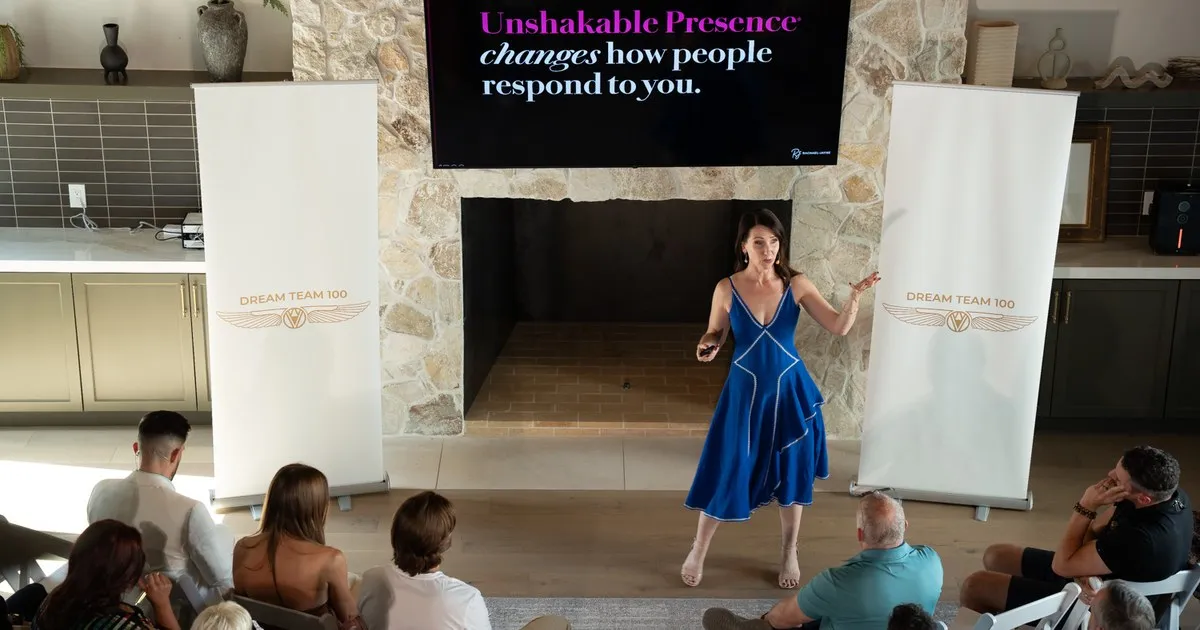
A teaching session at the August retreat in Scottsdale, with me in the front row for it.
They come from people who need a speaker this month and would rather book someone they know than someone they found.
Other coaches’ events are the obvious one. Anybody running a workshop, a live day or a paid community has a calendar to fill and an audience they’re protective of. The host’s real fear isn’t a dull talk. It’s a guest who spends forty minutes selling to their people. If they’ve watched you work, or someone they trust has, that fear goes away and you get the slot.
Podcasts work the same way with a faster turnover. A weekly show needs fifty guests a year, and most hosts would rather book a peer’s recommendation than read another cold pitch. If you’re wondering how to get on podcasts as a guest, the honest answer is that the ones worth being on mostly book through their hosts’ networks, and cold pitching tends to get you booked on podcasts whose audience barely overlaps yours.
Retreats and masterminds are the third. A room that meets regularly needs members to teach members, and a session you run for peers who serve the same buyer you do is a talk with the right audience already seated.
And partner launches are the one people forget. When someone in an adjacent niche runs a challenge or a launch, they often want a guest expert for one day of it. That’s a stage, it usually comes with a recording, and it’s put in front of people who’ve just been told by someone they trust that you’re worth listening to.
Not all of these pay a fee at the start. Plenty pay in access, in a recording you can use, or in clients who find you afterwards. That’s the honest version of how a first year goes, and the fee conversation gets easier once there’s footage and a host willing to vouch for you.
Be the Guest a Host Can Introduce in One Sentence
Hosts book people they can explain. If a host can’t introduce you to their audience in one clear sentence, they’ll book somebody they can, however good your talk is.
This is the same problem that sinks most referral efforts, and the fix is the same too. Ask three past clients to describe what you do and see whether the answers agree. If they don’t, your talk title isn’t the issue. Making yourself easy to describe is the first job of a referral network, and a speaking calendar is really just a referral network with a microphone in it.
Once the sentence is clear, give the host the talk rather than a menu. One title, one outcome for their audience, and a straight answer on whether you’ll be making an offer at the end. Hosts say yes to guests who make the decision easy.
How a Talk Turns Into Referrals
A talk is the one hour in your month when a room full of people hears what you do from someone they already trust. The host’s introduction is a referral. Treat it like one and the stage keeps paying long after any fee has cleared.
The referrals come from three directions. The host first. If the session went well, ask who else they know who runs a room like theirs. Hosts know other hosts, and an introduction from one is a stronger pitch for the next booking than anything you could send cold.
Then the audience. Most people in the room won’t buy from you, but some of them know someone who should. Close on one plain sentence about who you help, so the person who thought of a friend halfway through your talk knows exactly what to say when they pass your name on.
Then the other speakers. Everyone else on the agenda serves the same audience you do from a different angle, which makes them natural referral partners. I’d rather leave an event with one speaker I can send clients to, and who’ll send them back, than with a pocket full of business cards from the breaks. I’ve done the business cards. They don’t turn into anything.
Follow up with the host inside a week. Thank them, send the recording if there is one, and tell them who in their audience you’d be glad to help. A host who hears from you afterwards books you again, and mentions you to the next host who asks.
How Can I Get Paid to Speak With People?
Access first, fee second. At the start, ask a host what their audience needs rather than what they pay, and treat the first few stages as the way you earn the right to charge.
Money from speaking tends to arrive three ways. A fee from the host. An offer you’re allowed to make at the end, which only works if the host agreed to it in advance and the audience is a real fit. And clients who come to you afterwards because they heard you somewhere they trusted. For most coaches the third arrives first and the first arrives last.
I’m not going to quote you a going rate. The ranges people publish run from nothing to celebrity money, and none of them describes your market. What you charge follows from how often you’re asked back and who’s asking, and that’s worth waiting to find out.
Are Speaker Certifications Worth It?
They’re worth it for the craft and not much use as a way in.
The National Speakers Association’s top credential shows the order clearly. It awards its Certified Speaking Professional designation only after 250 paid presentations and a minimum level of speaking income in five separate years. It’s a record of paid stages already delivered, which is exactly why it can’t be the thing that gets you the first ones.
If a course makes you a better speaker, take it for that. If it’s being sold as the door to paid bookings, look at who’s booking you now and ask whether a certificate would change their mind. Usually the answer is that they’d book you the moment someone they trust said to.
The Stage I Can Actually Offer You
I’m not going to pretend I built my business on a speaking career. I built it on referrals, after years of chasing everything else. Speaking is the second of the three levels in the method I teach, deal flow, then speaking, then partnerships, and the second level belongs to the room rather than to my résumé.
In Dream Team 100, members open doors for each other to bigger stages, which means their events, their podcasts and their audiences. One chosen expert per niche is what makes that easy. A host inviting you isn’t weighing you against someone else in the room who sells the same thing, so the invitation is easier to make. Partners who serve the same buyer are the ones most likely to hand you their stage, because your talk makes them look good to their own audience.
The January retreat in Phoenix is 100% referral focused, with its three days given to matchmaking, referrals and deals, which is deliberate. I’ve sat through enough speaker after speaker agendas to know where the useful conversations happen.
If you’re a coach with an offer that works and a message worth hearing, apply and we’ll find out on a call whether your niche is open.
FAQ on Becoming a Paid Speaker
How can I get paid to speak with people?
Start with hosts who already trust you or trust someone who vouches for you, and ask what their audience needs before you ask what they pay. Early stages often pay in access and clients. The fee follows once you’ve got footage and hosts asking you back.
Are speaker certifications worth it?
For improving your craft, they can be. As a way to get booked, not really. The National Speakers Association’s top designation requires 250 paid presentations before you can hold it, which tells you the stages come first and the credential records them.
How can I get paid to speak online?
The same way as in person, through hosts. Podcasts, virtual summits, partners’ webinars and guest sessions inside other people’s paid communities all need speakers regularly. Start with the ones run by people who already know your work, and let the recordings do the pitching for the next ones.